State Transportation Commission seal

State Transportation
Commission

2027 12-Year Program

Josh D. Shapiro

Governor

Michael B. Carroll

Secretary, PA Department of Transportation

Chairperson, State Transportation Commission

Kristin A. Mulkerin

Deputy Secretary for Planning

About the State Transportation Commission

Established by Act 120 of 1970, The Pennsylvania State Transportation Commission (STC) serves as the board of directors of the Pennsylvania Department of Transportation (PennDOT). The 15-member board evaluates the condition and performance of Pennsylvania's transportation system and assesses the resources required to maintain, improve, and expand transportation facilities and services. State law requires PennDOT to update Pennsylvania's 12-Year Transportation Program (TYP) every two years for submission to the STC for adoption.

Meet our members
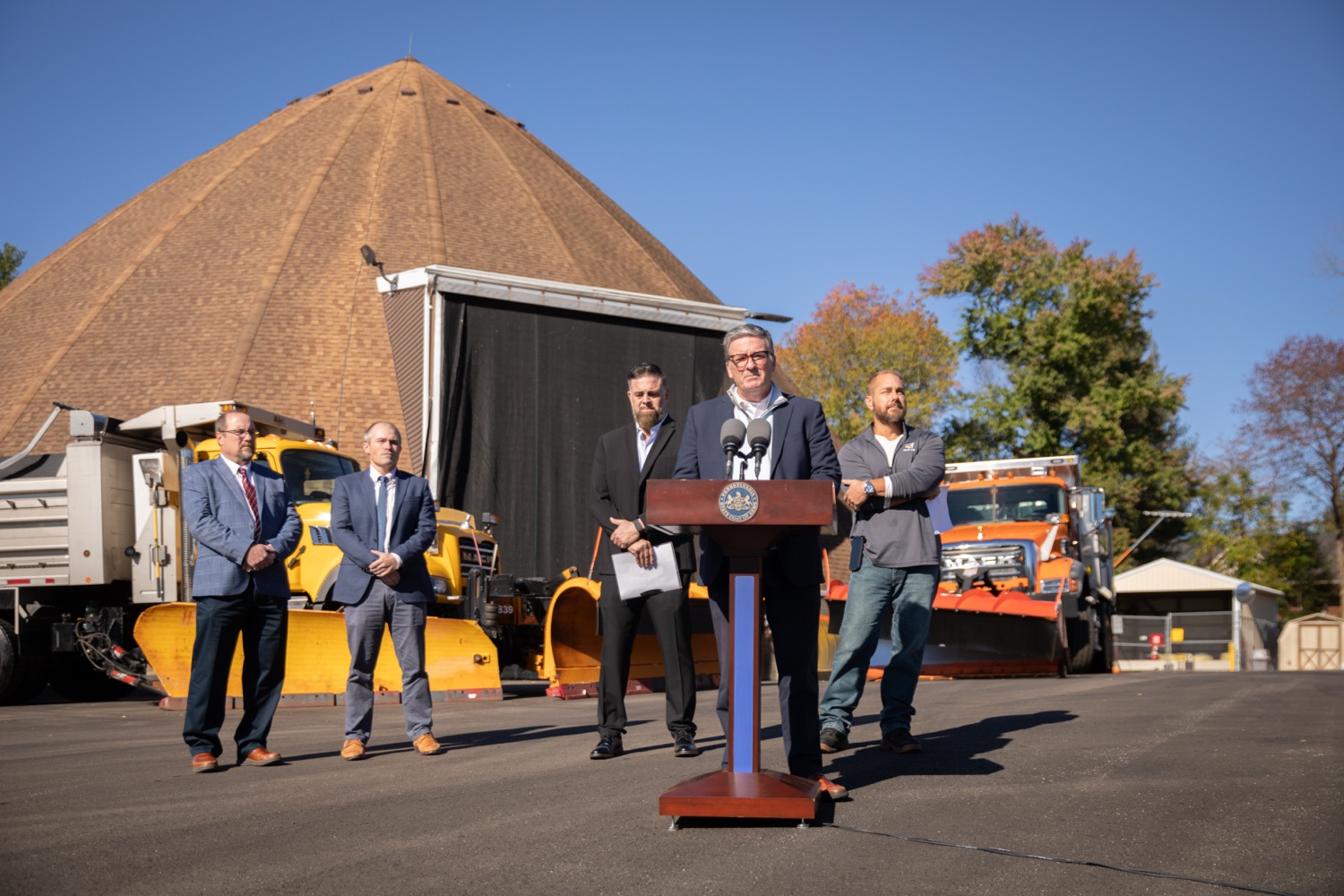
Michael B. Carroll, Secretary, PennDOT, outlines winter preparations
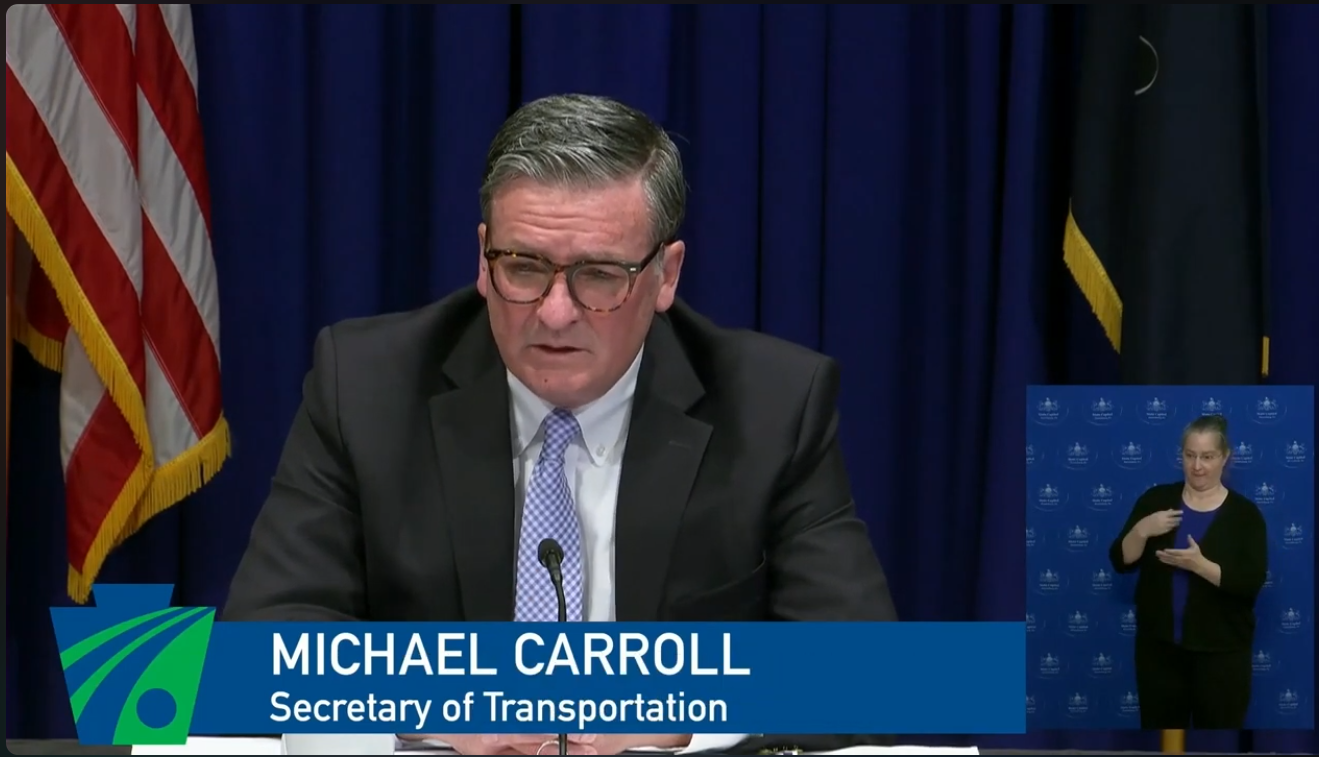
On behalf of PennDOT and the STC, I am honored to present Pennsylvania's 2027 12‑Year Program, a detailed plan for infrastructure projects and transportation investments across the Commonwealth for the next 12 years.

The 12‑Year Program, or TYP, is our official mid-range planning tool for compiling, prioritizing and assigning funding to all planned transportation projects statewide over the next 12 years. The TYP is updated every two years through a significant, collaborative effort to align with the policies, visions and goals of PennDOT, the STC, regional metropolitan and rural planning organizations, transportation stakeholders, and Commonwealth citizens. This partnership works diligently over an extended period of time to determine how this funding is spent, and we are indebted to our statewide planning partners for their time and dedication to this plan.

While the TYP prioritizes projects that promote safety, improve the condition of our roads and bridges, enhance mobility, and implement technological advancements, transportation in Pennsylvania is bigger than how many and what types of projects we fund. Transportation is about connecting our communities and improving how our people get to work, school, critical services and more. It is imperative that Pennsylvania remains a safe place to live, work and visit.

Developing this program went far beyond just transportation agency collaboration: Commonwealth citizens were and will remain a key participant in shaping each TYP. Every two years we ask for your input, and you increasingly continue to take the time to provide your informed, local knowledge of needs across all modes of transportation; insights that only you and your communities could understand. I speak for our entire organization in thanking you all for your passion and participation to help shape transportation planning in Pennsylvania.

I encourage you to review the 2027 TYP to see how your voice has helped shape our roadmap for the future of transportation in the Commonwealth.
Sincerely,

Portrait of Michael B. Carroll

Michael B. Carroll

Secretary, PA Department of Transportation

Chairperson, State Transportation Commission

78,445 miles of municipal and county roads 25,400 state-owned bridges 119 public-use airports 65 operating railroads 52 transit systems 2,483 miles of bicycle routes

Pennsylvania Transportation by the Numbers

Miles of state-owned roads

40,000

Miles of Pennsylvania Turnpike-owned roads

566

State-owned bridges

25,460

Pennsylvania Turnpike-owned bridges

1,160

Local bridges

6,600

Public-use airports

119

Private-use airports

219

Private-use heliports

282

Ports

3

Operating railroads

65

Miles of freight
railroad line

5,900

Transit
systems

52

Fixed-route
transit systems

33

Miles of BicyclePA routes

2,440

Transportation Advisory Committee

In addition to establishing PennDOT and the STC, Act 120 of 1970 also created the Transportation Advisory Committee (TAC). The 30-member TAC is comprised of members of the public, Pennsylvania Legislature, and leaders from several state agencies.

The TAC conducts in-depth studies of key transportation issues to advise the planning process, including the biennial Transportation Performance Report (TPR).

Meet our members

Explore the 2027 12-Year Program List of Projects

The list of 12-Year Program projects is organized by county to make searching more convenient. Please select a county below to view the list of projects for that county.

Interstate and Statewide projects are grouped separately and can be viewed here:

Search for and select a project from the list to view funding details.

Please note that projects without location data associated may not appear on the map.

Scenic view of Hollidaysburg, Pa.
Federal Funding State Funding Local Funding Grant Programs

PennDOT Funding: A Mix of Opportunities and Challenges

Transportation projects listed in the 12-Year Program (TYP) use a combination of federal, state, and local funding. The funding amounts available over the 12-year period reflect anticipated financial investments based on legislation, actual and anticipated budgets, and historical trends.

Program Total

$90,975

2027-2038 12-Year Transportation Program
Funding Level by Mode ($ millions)

    Slice sizes are scaled for readability. Exact amounts are shown above.

    Progress Made Possible Through Federal Funding

    The Infrastructure Investment and Jobs Act (IIJA) was signed into law in November 2021 and is bringing $4 billion in new federal funds to Pennsylvania for transportation projects over five years. This significant investment is crucial to addressing infrastructure needs.

    This legislation reauthorized many existing funding categories for highways, bridges, and transit while also establishing new funding programs that provide for increased investment in bridges, the reduction of transportation emissions, strengthening transportation infrastructure against extreme weather and natural disasters, and electric vehicle charging infrastructure.

    Due to the expiration of the IIJA, federal funds are assumed to remain flat for the 2027 TYP, while state funds are based upon anticipated revenues through the annual state budget process.

    Categories of Federal Funding

    Legislation such as the IIJA sets the level of federal funding and assigns that funding to specific uses or programs. Examples of these funding categories include:

    • National Highway Performance Program - Improvements to the most heavily traveled roadways and bridges, including the interstate system.
    • Surface Transportation Block Grant Program - Improvements on most other roadways and bridges eligible for federal funds.
    • Highway Safety Improvement Program - Targeted, data-driven investments to reduce all roadway fatalities and injuries.
    • Congestion Mitigation and Air Quality Program - Improvements designed to reduce congestion and improve air quality to help meet Clear Air Act requirements.
    • Transportation Alternatives Set-Aside Program - Investments in pedestrian and bicycle facilities, historic preservation and other community improvements.
    • Carbon Reduction Program - Funds for projects designed to reduce transportation-related carbon dioxide emissions from on-road highway sources.
    • Bridge Formula Investment Program - Funding for the replacement, rehabilitation, preservation, protection, or construction of highway bridges over 20 feet in length.
    • Promoting Resilient Operations for Transformative, Efficient and Cost-Saving Transportation - Provides funding to ensure surface transportation resilience to natural hazards including climate change, sea level rise, flooding, extreme weather events, and other natural disasters.

    Within these programs, funds can be further assigned to specific categories of emphasis. For example, a percentage of Surface Transportation Block Grant Program funding is designated for improvements of "off-system bridges," often owned by municipalities that have lower traffic volumes, and another portion is set aside for areas with specific population thresholds.

    Transportation Planning in Pennsylvania

    Multiple plans and programs are used to evaluate, set goals, select projects, and fund Pennsylvania's transportation needs.

    The projects listed in the first four years of the 12-Year Transportation Program (TYP) are parts of the federally required Statewide Transportation Improvement Program (STIP). The STIP includes the 24 individual regional Transportation Improvement Programs (TIPs) representing each metropolitan planning organization (MPO), rural planning organization (RPO), and one independent county, Wayne County. It also includes two statewide programs: Interstate Management Program and Statewide Initiatives. Each TIP includes a list of projects with funding assigned for each year. In Pennsylvania, MPOs and RPOs update their TIPs every two years as part of the TYP update process. The MPOs and RPOs conduct public involvement activities when developing their TIPs. The public involvement programs are defined in each region’s Public Participation Plan.

    Transportation Performance Management

    Transportation Performance Management is a strategic approach that uses system information to make informed investment and policy decisions to achieve local, state, and federal goals for the reliable, predictable, and safe movement of people and goods. Projects listed in the TYP are aligned with these goals to improve the transportation system with a focus on safe, connected, and productive communities.

    Planning and Prioritizing Projects

    The TYP lists projects based on the following:

    • Delivery schedules
    • Expected funding availability
    • Regional and statewide goals
    • Targets for infrastructure performance and condition
    • Public input

    Projects are organized by the associated MPO or RPO and further described by transportation mode and county. Transportation project costs are allocated over one or more four-year periods based on the anticipated schedule of the project. The TYP also includes line items by funding category, which are typically seen in the second and third four-year program periods. As new projects are identified, the line items are adjusted to reflect the detailed phases and costs associated with advancing the project, all within fiscal constraints.

    View of Main Street in Shrewsbury, Pa.
    View of Main Street in Shrewsbury, Pa.

    Transportation Program Review and Approval

    PennDOT submits the TYP to the STC every two years. The STC reviews and votes to adopt the TYP. PennDOT then sends the STIP (the first four years of the TYP) to the Federal Highway Administration, the Federal Transit Administration, and the U.S. Environmental Protection Agency for review and approval prior to the start of the federal fiscal year on October 1.

    Transportation Program Development Process

    12-Year Program Cycle

    1. 2027
    2. 2028
    3. 2029
    4. 2030
    5. 2031
    6. 2032
    7. 2033
    8. 2034
    9. 2035
    10. 2036
    11. 2037
    12. 2038

    1st Four Years (TIP & STIP)

    2nd Four Years

    3rd Four Years

    Scroll left and right

    The TYP Process

    The TYP update process takes place over a two-year period, beginning with the Transportation Performance Report (TPR) that details the condition of transportation in Pennsylvania. This is immediately followed by a call to action for the public to provide feedback on transportation priorities and needs. More information on public participation is provided below.

    Learn about the 12-Year Program Process

    This animated tool explains how Pennsylvania progresses from transportation planning to transportation projects.

    Take a ride

    The STIP Process

    The Statewide Transportation Improvement Program (STIP) lists statewide planned projects and assigns funding over a four-year period. It includes the 24 regional Transportation Improvement Programs (TIPs) and two statewide-managed TIPs (Interstate Management Program TIP and Statewide Initiatives TIP). The STIP is updated every two years after the regional TIPs are submitted and approved. The draft 2027 STIP Public Comment Period was held from June 15 through June 30, 2026, and 233 public comments were received.

    Learn about the STIP Process

    Learn how projects included in the STIP are approved for implementation and design.

    Take a trip
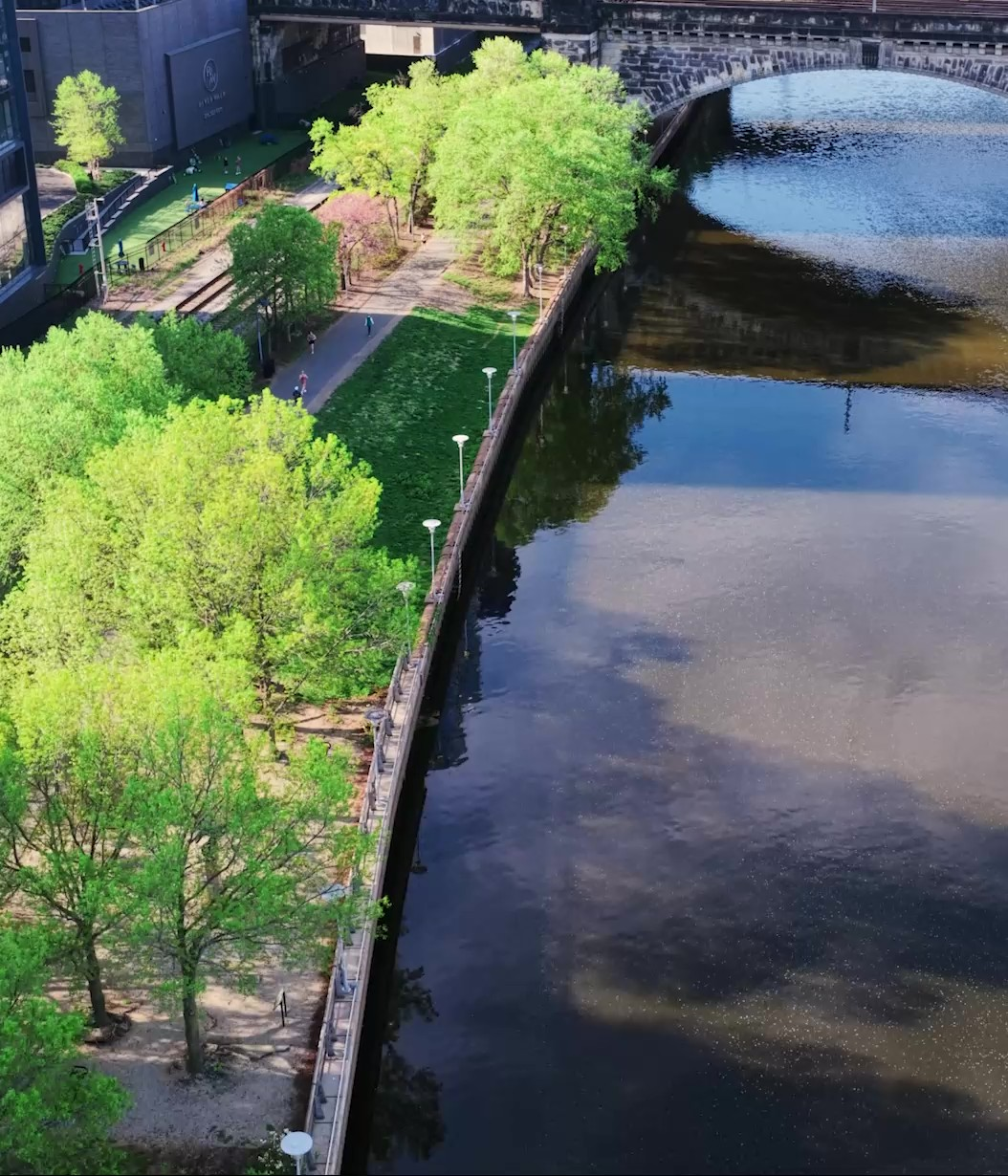
    Downtown Harrisburg and the Pennsylvania State Capitol reflected in the Susquehanna River.
    Front Street, Harrisburg overlooking the Susquehanna River

    Metropolitan and Rural Planning Organizations

    Do you know your Metropolitan or Rural Planning Organization?

    Pennsylvania's statewide transportation planning effort begins at the local level with regional plans and programs. Pennsylvania has 19 MPOs, four RPOs, and one independent county (Wayne County).

    Meet our partners
    Public Participation Comments Involvement Local Feedback Outreach

    Public Participation

    Public involvement is an important part of the TYP update process. Every two years, as part of a biennial Public Outreach Campaign, the STC holds a Public Comment Period to request feedback on local, regional, and statewide transportation issues and priorities. The 2025 Public Outreach Campaign was conducted in support of the 2027 TYP update.

    Throughout each biennial Campaign, public feedback is received and analyzed for use by the Program Center, Planning Partners across the state, and STC for the update of Pennsylvania’s multimodal TYP. All public input is compiled, documented, and analyzed for use in the TYP, statewide LRTP, FMP, regional TIPs, and regional LRTPs. This feedback plays a key role in the decision-making process for identifying and funding transportation projects.

    At the time of the 2025 Public Outreach Campaign’s conclusion, the Transportation Survey had received responses from 9,186 participants in total – the second-highest number of surveys received during a Public Comment Period since the initiative’s inception in 2013. The 2025 Survey showed sustained growth in participation among respondents under 25, along with a more even distribution across age groups.

    PennDOT has ample documentation that reflects the integration of public feedback throughout this planning process, and the outcomes are also shared with the public so that they can verify their feedback was received, documented, and utilized. The Public Outreach Campaign for the TYP update continues to generate increased interest, responses, quality, and value in terms of public participation in one of PennDOT’s most unique and comprehensive transportation planning initiatives.

    PennDOT and STC leadership participate in the 2025 Online Public Forum live broadcast.
    The 2025 OPF live broadcast featured a presentation and Q&A with PennDOT and STC leadership

    2027 TYP
    Outreach Process

    PennDOT's TYP update process begins with a statewide public outreach effort conducted every two years. The TYP is unique to Pennsylvania, serving as a mid-range planning tool that lists statewide planned projects and assigns funding to projects over three four-year periods.

    The first milestone of the 2025 Public Outreach Campaign was marked by the launch of the updated Transportation Survey in August 2024, seven months before the Public Comment Period, to coincide with PennDOT public events held that fall. Opening the Survey at that time significantly extended its availability beyond the traditional 45 days.

    The next step was the release of the 2025 Transportation Performance Report (TPR). The TPR is a combined effort among the STC, TAC and PennDOT, and is updated every two years. It is the first step in the state's transportation program planning process and helps evaluate the system's performance and opportunities for progress.

    The STC adopted the 2025 TPR on February 26, 2025, immediately after which the document was published on the TalkPATransportation website. As with previous outreach campaigns, the public was encouraged to review the TPR to better understand the status of Pennsylvania's transportation system before the next step in the process.

    Following the adoption of the 2025 TPR, the TYP Update Public Comment Period launched on Monday, March 3, 2025, and concluded Wednesday, April 30, 2025.

    Public Comment Period promotion and public outreach methods included:

    • Two key public involvement activities - an Online Public Forum and the Transportation Survey
    • Dynamic website curation, including a Campaign dashboard and Online Toolkit featuring all Campaign materials and resources
    • Pop-up events to engage with Pennsylvanians and promote participation opportunities
    • An extensive social media campaign, including translated media/graphics, across four platforms (Facebook, Instagram, LinkedIn, Twitter/X)
    • Email communications/outreach to over 9,000 stakeholders, subscribers, and organizations
    • A new Public Response App, designed for use by Planning Partners to acknowledge, address and respond to all transportation concerns submitted on the Survey mapping module
    • Coordination with Pennsylvania's federally recognized Native American Nations

    To be more purposeful, equitable, transparent, and strategic, the project team implemented a combination of traditional and new outreach techniques to greatly increase the reach and accessibility of Campaign materials and opportunities.

    Pop-up Events

    In addition to launching the Transportation Survey significantly earlier than usual for a TYP Public Outreach Campaign cycle, the project team also appeared at several pop-up events over the course of the 2025 Campaign to engage the public and promote the Survey and other campaign information including upcoming participation opportunities.

    Pennsylvania Auto Show: January 23 - 26, 2025

    Millersville University: April 3, 2025

    West Chester University: April 17, 2025

    These appearances included staffed vendor booths featuring campaign signage, printed materials, and the ability to take the Survey either via paper copy or on a provided tablet.

    Analyze, Summarize, and Share

    Once the Public Comment Period concluded, all Survey data was compiled into reports presenting the data on both regional and statewide levels, while also showing how the 2025 data compared to that of the 2023 cycle.

    All feedback and data were shared with the MPOs and RPOs in advance of the development of their regional TIPs. The survey results and raw data were also posted on the STC website results page.

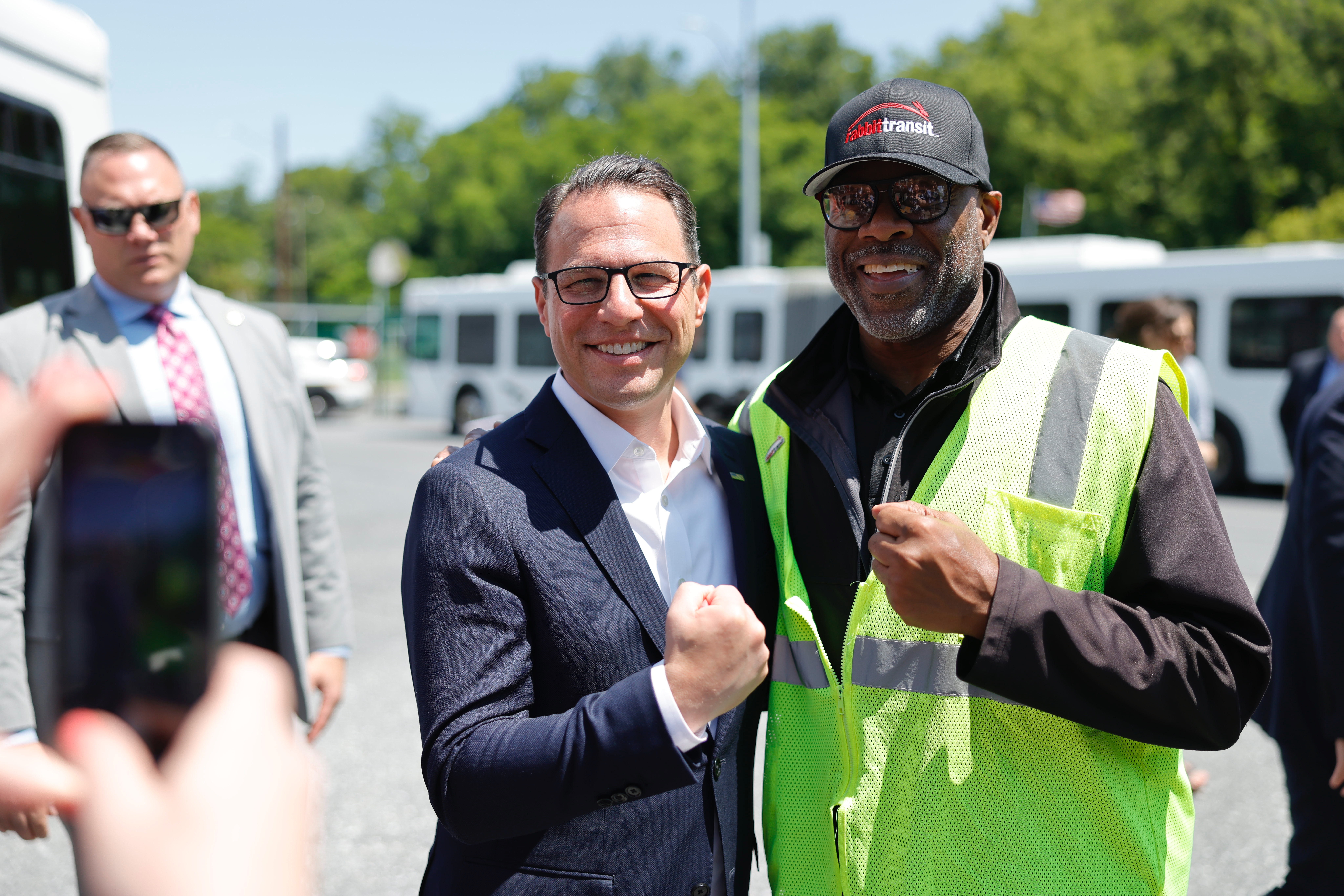
    Governor Josh D. Shapiro joined transit leaders in Dauphin County
    Governor Josh D. Shapiro joined
    transit leaders in Dauphin County
    Public Participation Comments Involvement Local Feedback Outreach

    More Initiatives

    Thank You 2027 12-Year Program Stay Engaged

    Stay Engaged

    PennDOT’s Center for Program Development and Management (Program Center) under the Office of Planning is responsible for developing, managing, and updating the Commonwealth’s TYP. The Program Center also coordinates with local, county, regional, and federal agencies on long-range transportation planning and short-range programming. Members of the Program Center also serve as the executive staff to the State Transportation Commission (STC).

    Kristin Mulkerin

    Deputy Secretary for Planning

    Mark Tobin

    Bureau Director

    Nathan Walker

    Division Chief, Transportation Program Investments Division

    Dan Keane

    12-Year Program Manager

    Terry Pinder

    Communications

    Brian Sharkey

    Data Inquiries

    Lauryn Goshorn

    Executive Secretary

    Thank You

    Thank you to everyone who participated in the 2027 update.

    TalkPATransportation.com contains many resources about transportation planning. If you have questions or comments, please email us at PA-PennDOTSTC@pa.gov or call us at (717) 783-2262.